Inside Ms. Gibson's science classroom, students recently took on a challenge that mirrors the work of professional engineers: design a system that could protect a life in a crash.
In this case, that “life” was an egg.
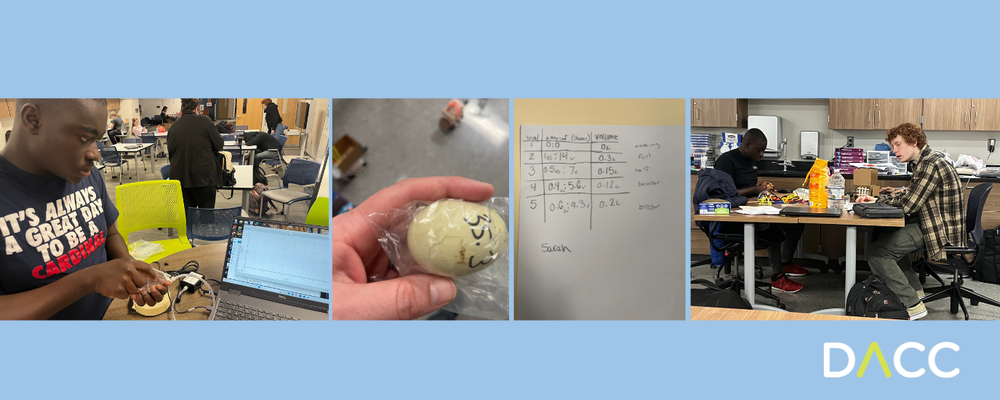
Students in DACC’s chemistry and physics classes spent weeks designing, testing, and refining model vehicles equipped with airbag systems. Their goal was simple, yet complex in execution: prevent the egg from breaking during impact.
What made the project stand out was not just the science behind it, but how students approached the work.
“They divided responsibilities and trusted each other to complete different parts of the project,” Gibson said. “Many of them said it felt like a real workplace environment, where everyone has a specific role.”
The project, made possible through a grant from the Ohio STEM Learning Network funded by Battelle, gave students the opportunity to apply key concepts such as momentum, force, pressure, and chemical reactions in a hands-on, meaningful way.
Students began by developing initial designs for their vehicles, carefully considering how an airbag should function under different conditions. Using a chemical reaction of baking soda and vinegar to inflate airbags, they tested how varying levels of inflation affected the outcome.
Too much inflation could cause damage. Too little would not provide enough protection. Finding the right balance required multiple rounds of testing, data analysis, and design adjustments.
Throughout the process, students collected data, created graphs, and evaluated performance based on outcomes ranging from complete failure to full success. Some even took their analysis a step further by building spreadsheets to automate calculations and better visualize their results.
Each group presented its findings, sharing both successes and setbacks. While some designs effectively protected the egg, others revealed weaknesses in engineering decisions. Gibson saw value in both outcomes.
“Some groups were very successful, while others learned from designs that didn’t perform as well,” she said. “That became an important part of the learning process.”
Students also discovered that precision matters. While classroom tools allowed for meaningful analysis, they recognized the difference between their setup and the high-level equipment used in professional testing environments. This awareness was reinforced through the project’s connection to real-world research and industry practices.
For Gibson, one of the most rewarding aspects of the project was watching students pull together everything they had learned throughout the year.
“It turned into a really strong end-of-year project where students could apply their skills in a real-world scenario,” Gibson said. “They took concepts from the beginning of the year and brought them all together.”
The experience left a lasting impression on students, with feedback reflecting high levels of engagement and enthusiasm. The hands-on nature of the project, combined with its real-world application, helped students see the direct impact of science and engineering in everyday life.
Looking ahead, Gibson plans to continue and expand the project in future years. With equipment already in place, she hopes to deepen the focus on energy and impact, giving students even more opportunities to explore how science protects lives.
“This is something we will continue,” Gibson said. “It’s been exciting to see how much students gained from it.”
Through experiences like this, DACC continues to deliver on its mission to provide authentic, engaging learning opportunities that prepare students not just for graduation, but for success in the workforce and beyond.